
Vacuum Lead Screw Linear Actuators
Spotlight vacuum lead screw linear actuators can be configured from every standard lead screw motor platform for 10⁻⁷ Pa service while retaining the electrical, mechanical and motion parameters of the corresponding standard model.
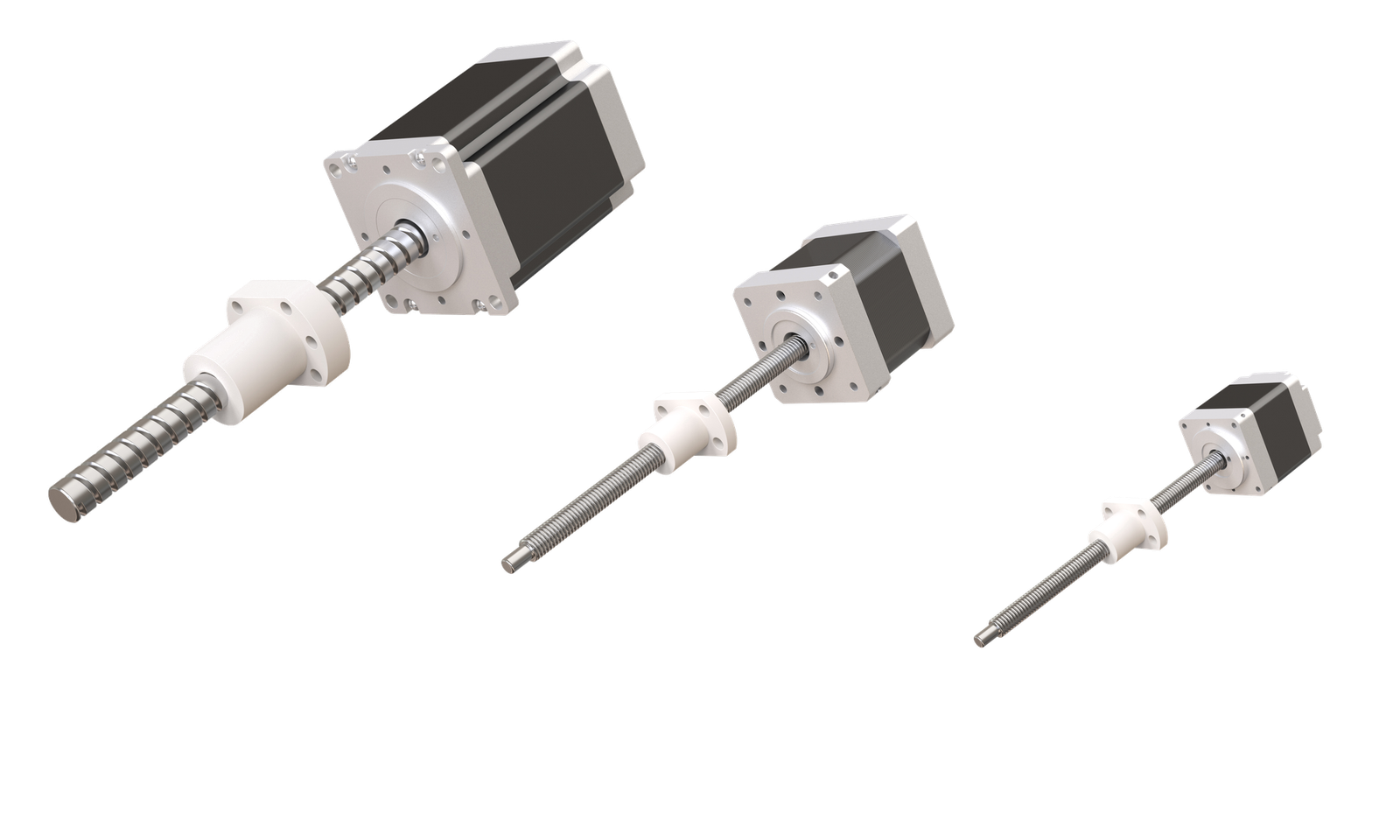
A vacuum linear axis configured around your motion requirement
Each assembly is specified around the equipment envelope, target motion profile and vacuum operating conditions instead of forcing a fixed catalog configuration.
Vacuum options across the range
All standard lead screw motor platforms can be adapted for vacuum service, with materials, lubrication, cabling and connectors selected for the application.
Application-specific motion design
Frame size, screw lead, travel, winding and mechanical arrangement are matched to the required load, speed and positioning duty.
Integration-ready mechanics
Motor, lead screw and nut geometry can be coordinated with mounting constraints, available space and the surrounding machine structure.
Standard performance with vacuum compatibility
The vacuum version keeps the corresponding standard product’s frame, winding, lead screw, thrust or load rating, travel per step, motor length and mechanical dimensions. Vacuum-compatible materials, lubrication, cabling and connector options are applied for 10⁻⁷ Pa service.
Vacuum versions mapped to standard SP series
| Standard model | Frame size | Maximum thrust | Lead range | Vacuum level |
|---|---|---|---|---|
| SP14SLA | 14 mm | Up to 19 N | 0.3–8 mm | 10⁻⁷ Pa |
| SP20SLA | 20 mm | Up to 70 N | 0.3–8 mm | 10⁻⁷ Pa |
| SP28SLA | 28 mm | Up to 150 N | 0.3175–10.16 mm | 10⁻⁷ Pa |
| SP35SLA | 35 mm | Up to 300 N | 0.6096–25.4 mm | 10⁻⁷ Pa |
| SP42SLA | 42 mm | Up to 600 N | 0.6096–25.4 mm | 10⁻⁷ Pa |
| SP57SLA | 57 mm | Up to 1300 N | 0.635–25.4 mm | 10⁻⁷ Pa |
| SP60SLA | 60 mm | Up to 1560 N | 0.635–25.4 mm | 10⁻⁷ Pa |
| SP86SLA | 86 mm | Up to 2270 N | 2.54–25.4 mm | 10⁻⁷ Pa |
Voltage, current, resistance, inductance, step angle, motor length, travel per step, screw diameter, configuration and mechanical dimensions remain the same as the selected standard SP series product.
Vacuum versions mapped to standard SP ball screw series
| Standard model | Frame size | Recommended load limit | Ball screw lead | Vacuum level |
|---|---|---|---|---|
| SP14BSA | 14 mm | Up to 15 N | 1 / 2 mm | 10⁻⁷ Pa |
| SP20BSA | 20 mm | Up to 45 N | 1 / 2 mm | 10⁻⁷ Pa |
| SP28BSA | 28 mm | Up to 140 N | 1 / 2 / 6 mm | 10⁻⁷ Pa |
| SP35BSA | 35 mm | Up to 230 N | 1–12 mm | 10⁻⁷ Pa |
| SP42BSA | 42 mm | Up to 230 N | 1–10 mm | 10⁻⁷ Pa |
| SP57BSA | 57 mm | Up to 910 N | 2–20 mm | 10⁻⁷ Pa |
Load figures are the recommended upper limits stated for the corresponding standard product under its reference test conditions. Electrical, travel-per-step, accuracy, screw, nut and mechanical data follow that standard product.
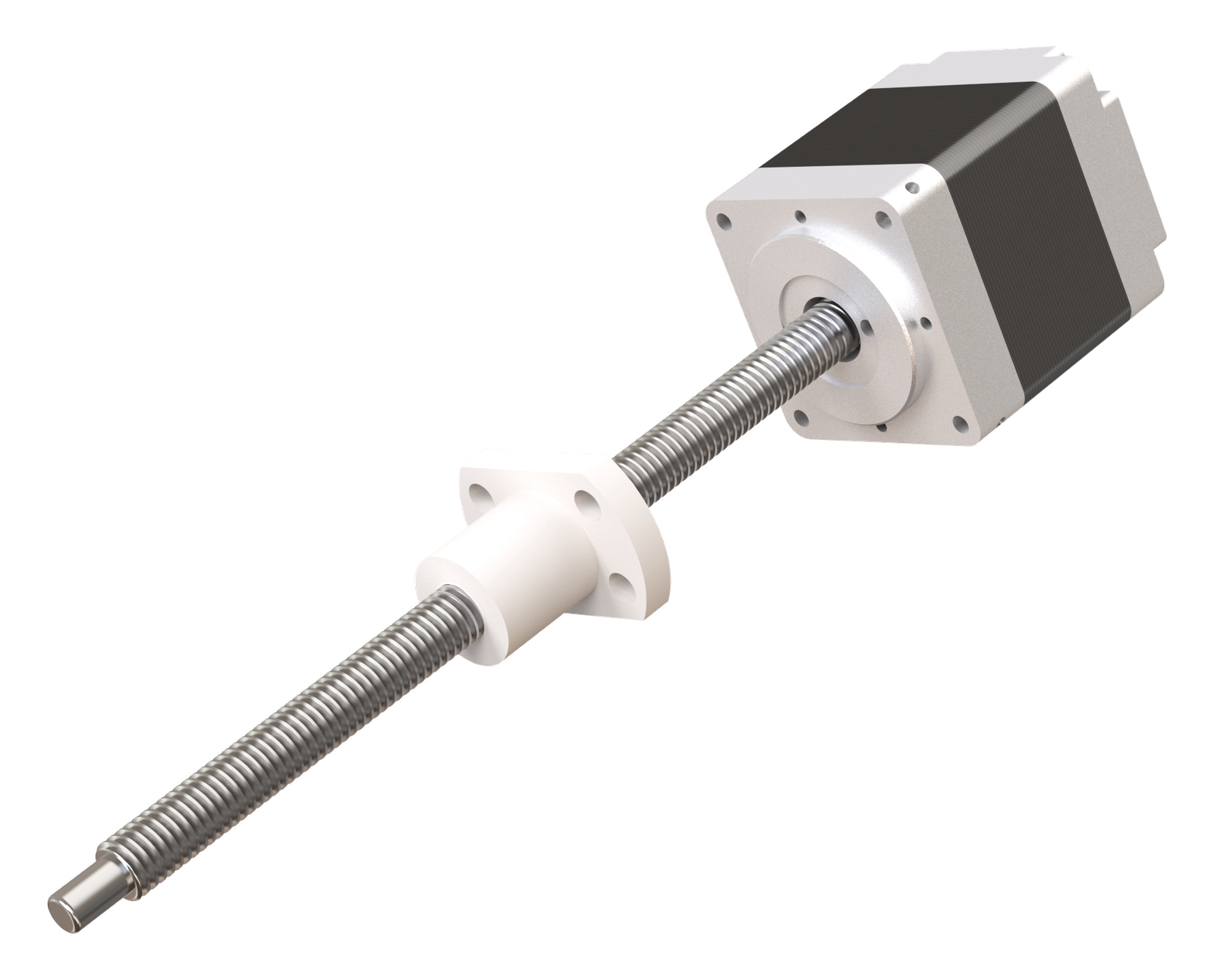
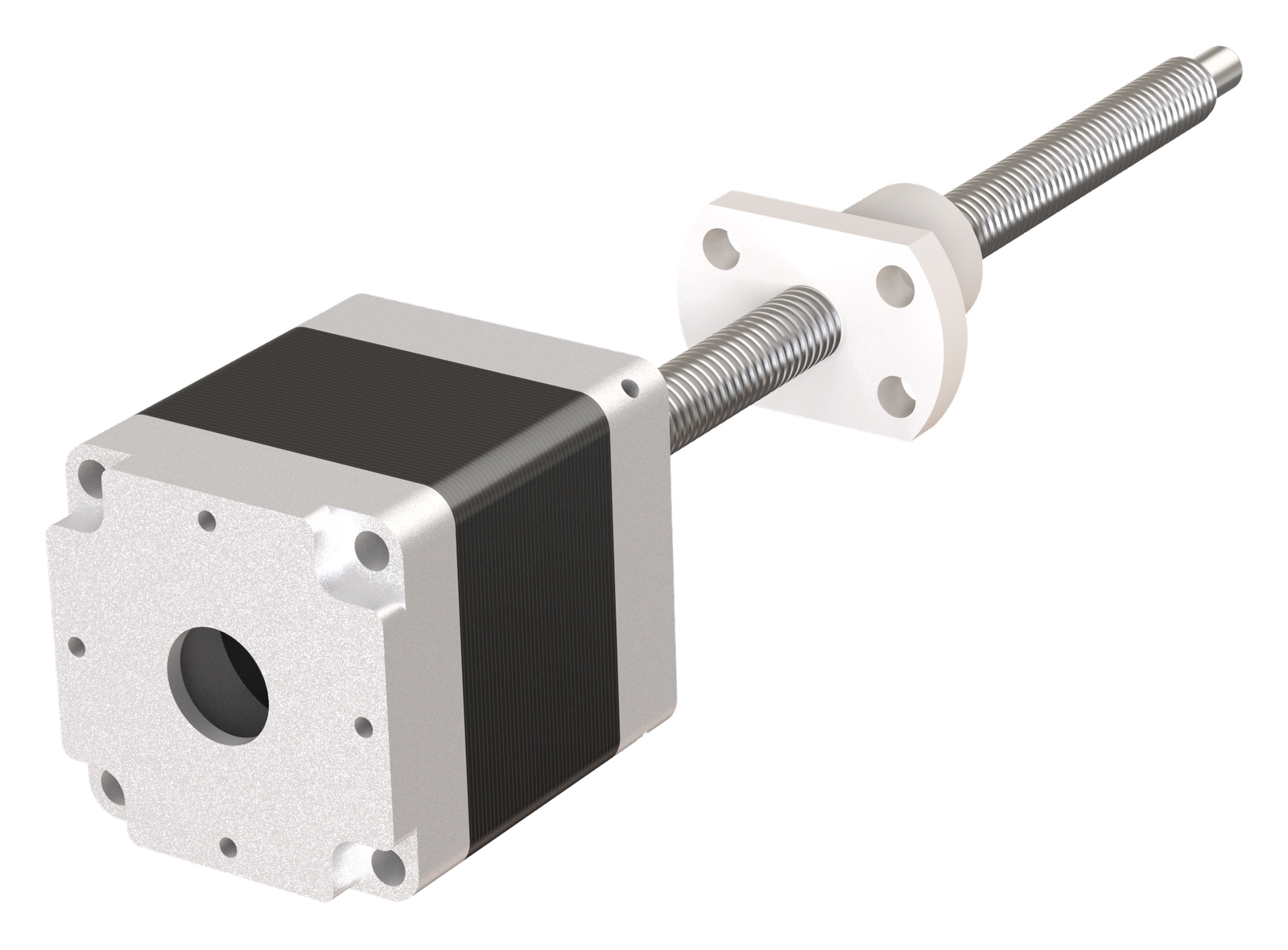
28 mm platform
Representative vacuum build
35 mm platform
Representative vacuum build
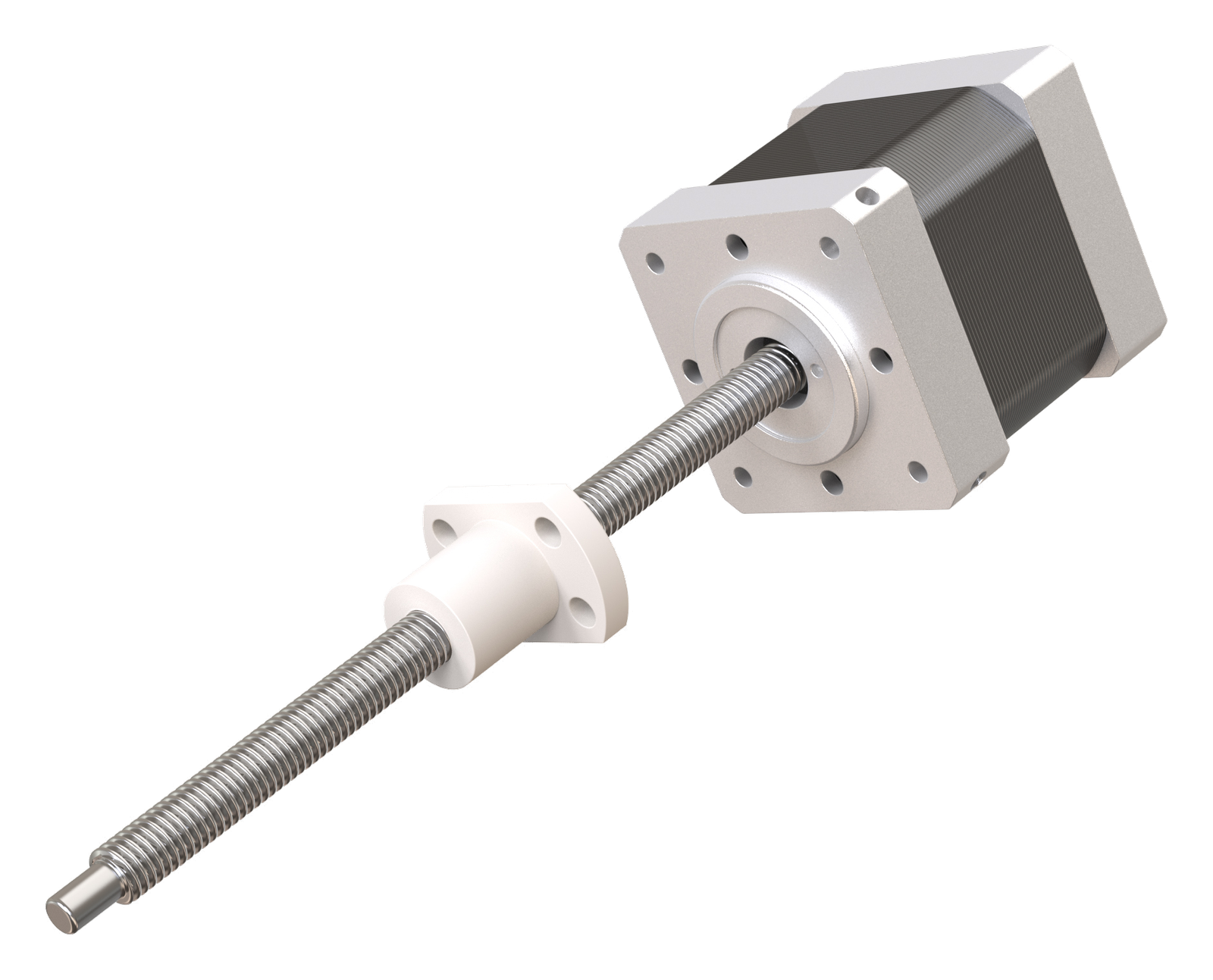

57 mm platform
Representative vacuum build


Motor and lead screw developed as one mechanical assembly
A coordinated actuator design helps OEM teams align the motor, screw, nut and mounting interfaces with the surrounding vacuum mechanism.
- Vacuum versions available across standard lead screw motor series
- Lead, travel and nut interface selected for the target motion
- Vacuum materials, lubrication and cabling reviewed by application
For precision motion inside controlled vacuum systems
The configurable format supports OEM equipment that requires compact electromechanical positioning with application-specific vacuum compatibility.
Semiconductor equipment
Positioning and transfer functions in vacuum process and handling modules.
Optical instruments
Fine adjustment mechanisms for optical, inspection and metrology systems.
Research equipment
Custom linear axes for laboratory vacuum chambers and experimental apparatus.
Vacuum automation
Compact motion assemblies for valves, stages and auxiliary mechanisms.
Start with the standard model, then add the vacuum configuration
Select the standard lead screw product by frame, lead, load, speed and travel, then confirm the vacuum-specific material, lubrication, cable and connector requirements.
Discuss your vacuum linear motion requirement with our engineers.
Share the chamber conditions, motion profile, installation envelope and electrical interface for configuration review.